

Sewage backup cleanup is an essential aspect of maintaining a healthy, safe, and comfortable home. Sewage backups can occur due to various reasons and regardless of the cause, when such an incident occurs, it can pose serious health risks and cause significant property damage if not promptly addressed.
In this comprehensive guide, we delve into the critical aspects of maintaining a healthy, safe, and comfortable home. We will take a closer look at the common causes of sewage backups.
We will discuss the significant dangers that a sewage backup poses, from exposing households to harmful pathogens and structural damage to releasing foul odors and attracting pests. This leads us to explore the importance of engaging professional cleanup services for their expertise, specialized equipment, and ability to prevent future problems.
Furthermore, we illustrate the process of sewage backup cleanup, emphasizing the steps. Towards the end, we highlight preventive strategies to avoid sewage backups and minimize their risks.
Overall, this blog aims to equip homeowners with the necessary knowledge to respond effectively to a sewage backup situation and maintain a healthier home environment.
Table Of Contents:
- What is Sewage Backup
- Common Causes of Sewage Backup
- The Importance of Immediate Attention to Sewage Backup Issues
- The Importance of Professional Sewage Backup Cleanup
- The Process of Sewage Backup Cleanup
- Preventive Measures to Avoid Sewage Backup
- FAQs About Sewage Backup Cleanup
- Maintaining a Healthy Home: The Important Role of Sewage Backup Cleanup
What is Sewage Backup
A sewage backup occurs when wastewater or sewage, which is supposed to drain out of your home through the sewer lines, reverses its course and flows back into your home due to a blockage or problem in the sewer system.
This unfortunate event can happen due to various reasons, such as clogged pipes, septic system failure, tree root infiltration into sewer lines, or municipal sewer system malfunctions. It can lead to significant property damage, as well as pose serious health risks due to the hazardous contaminants present in the sewage.
When Sewage backup occurs, this requires professional intervention to ensure a safe, thorough cleanup and to prevent further complications or damage.
Common Causes of Sewage Backup
Sewage backups can be caused by several factors, often related to the conditions of the plumbing and sewer systems.
Here are some of the most common causes:
Clogged Pipes: One of the most frequent causes of sewage backup is a blockage in the pipes. This can be due to a buildup of grease, hair, food waste, or non-flushable items such as baby wipes, sanitary products, and paper towels.
Tree Roots: Tree roots can infiltrate your sewer line, causing obstructions and eventual backups. Roots are attracted to the moisture in the pipes and can grow into the pipe itself, causing cracks and blockages.
Aging Sewer Systems: Older sewer systems might have deteriorated or corroded over time, leading to collapses in the line and sewage backups. Materials like clay or cast iron used in older systems can break down over time.
Sewer Line Sagging: Over time, sections of your sewer line may sag due to ground or soil conditions. These sags or “bellies” in the line can cause waste to accumulate and block the flow, leading to a backup.
Heavy Rainfall or Flooding: When city sewer systems and storm drains are overwhelmed by heavy rainfall or floods, it can lead to sewage from sanitary sewer systems flowing back into homes.
Damaged Sewer Pipes: Breaks or cracks in your sewer line can cause sewage to leak out. This can be caused by ground shifts, heavy machinery operating above the line, or just aging infrastructure.
Incorrectly Installed or Failed Backwater Valves: These valves, when functioning properly, prevent sewage from flowing back into a home. If they are incorrectly installed or fail, a backup can occur.
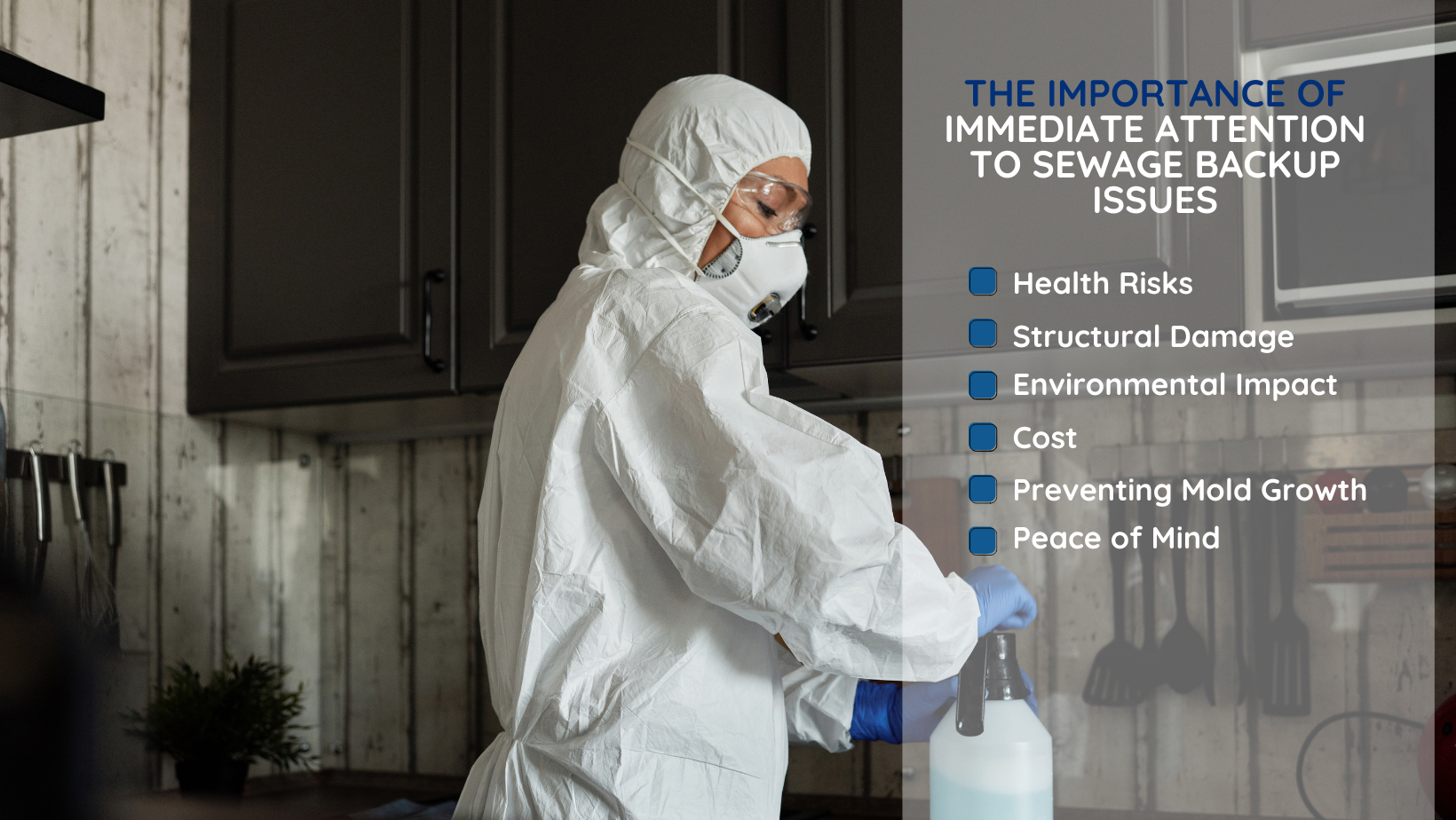
The Importance of Immediate Attention to Sewage Backup Issues
Immediate attention to sewage backup issues is paramount for several reasons:
- Health Risks: Sewage backup can expose you and your family to a range of harmful pathogens, including bacteria, viruses, and parasites. This exposure can lead to various diseases, such as gastroenteritis, hepatitis, and skin infections. The sooner the cleanup begins, the lesser the health risk.
- Structural Damage: Sewage backup can cause significant structural damage to your home. The longer the sewage sits, the more damage it can cause to floors, walls, furniture, and personal belongings.
- Environmental Impact: Unattended sewage backup can find its way into the local ecosystem, polluting water bodies and harming wildlife. Immediate cleanup prevents further environmental damage.
- Cost: The longer it takes to address the issue, the more extensive the damage can be, which leads to higher repair and replacement costs. Immediate cleanup helps mitigate these costs.
- Preventing Mold Growth: Sewage backup can create a suitable environment for mold growth, which can cause health problems and structural damage. Prompt cleanup can reduce the risk of mold growth.
- Peace of Mind: Knowing that your home is clean, safe, and free from potential hazards gives you peace of mind. It’s a reassurance that you’ve reduced the risks to your family’s health and protected the value of your home.
Remember, due to the health risks and the technicalities involved, it’s usually best to contact a professional sewage cleanup service rather than attempting to handle the situation on your own.
Premier Carpet Cleaning & Restoration possesses the necessary equipment, protective gear, and training to conduct a thorough and safe cleanup.
The Importance of Professional Sewage Backup Cleanup
Professional sewage backup cleanup is an essential step to ensure the safety and well-being of your household, as well as the integrity of your property.
Here are the primary reasons why professional cleanup is important:
Ensuring Health and Safety
Professionals are trained to handle sewage backup safely. They use personal protective equipment (PPE) to avoid direct contact with harmful bacteria, viruses, and other pathogens found in sewage. This is crucial to avoid diseases that can result from exposure.
Proper Disinfection & Expertise
Professional cleaners have access to commercial-grade disinfectants and cleaners that are more effective at eliminating bacteria and viruses than typical household cleaning agents.
Experience and Training
Professionals have the necessary training and experience to thoroughly clean and restore your property. They can properly evaluate the situation, develop an effective cleanup plan, and execute it efficiently.
Advanced Equipment
Professional services have access to advanced equipment like industrial-strength dehumidifiers, pumps, and air scrubbers, which help in the cleanup and restoration process more effectively than standard household tools and equipment.
Preventing Future Problems
Professional cleaners can help identify potential issues that may have caused the backup, like tree roots intruding into pipes, pipe damage, or sagging sewer lines. By addressing these issues, you can prevent future backups.
Time and Convenience
Cleaning up a sewage backup can be a time-consuming and difficult task. By hiring professionals, you can save yourself time and inconvenience, allowing you to focus on other important tasks.
Insurance Assistance
Many professional cleanup services will assist directly with your insurance company, helping you navigate the often complex claims process.
Given these benefits, it’s always advisable to opt for professional sewage backup cleanup to protect your property and your health effectively. Contact Premier Carpet Cleaning & Restoration for a professional sewage backup cleanup service.
.png)
The Process of Sewage Backup Cleanup
The process of sewage backup cleanup involves several steps to ensure that your home is safe, clean, and habitable. While the exact steps may vary depending on the severity of the situation, here is a general overview:
- Initial Assessment and Planning: The first step is to assess the extent of the damage and develop a cleanup plan. Professionals will evaluate the type of sewage, the areas affected, and the degree of damage. They’ll also identify any potential health and safety risks.
- Safety Measures: Before starting the cleanup, professionals will take necessary safety measures. This typically includes wearing personal protective equipment (PPE) and securing the area to prevent any accidental exposure to contaminants.
- Removal of Sewage and Contaminated Materials: Using industrial-grade pumps and vacuums, the professionals will remove the sewage from your property. Any severely contaminated materials, such as carpeting, upholstered furniture, or drywall, might need to be discarded.
- Cleaning and Sanitizing: Once the sewage and contaminated materials are removed, the affected area will be thoroughly cleaned and sanitized. Professionals use commercial-grade disinfectants and cleaning agents to ensure all harmful bacteria and pathogens are eliminated.
- Drying and Dehumidification: To prevent mold growth, it’s crucial to thoroughly dry the affected area. Professionals use industrial fans and dehumidifiers to remove moisture from the air and surfaces.
- Restoration and Repair: The final step is to restore and repair your home to its original condition. This might involve replacing damaged drywall, installing new carpeting, painting, or even more substantial repairs if the structural elements of the home were affected.
- Preventive Measures: Once the cleanup is complete, professionals can advise you on preventive measures to avoid future backups. This could involve regular maintenance, sewer line repairs, or changes in usage habits.
Preventive Measures to Avoid Sewage Backup
Taking preventive measures is crucial in avoiding the unpleasant and potentially harmful effects of sewage backups. Here are some key steps you can take to minimize the risk:
Regular Maintenance: Schedule regular inspections and maintenance of your home’s sewer system. This will help identify any potential problems early on and fix them before they lead to a backup.
Proper Disposal of Waste: Be mindful of what you flush down the toilet or drain. Avoid flushing items like paper towels, feminine hygiene products, diapers, or any non-biodegradable materials that could clog the pipes. Similarly, avoid pouring grease or oil down the drain as they can harden and cause blockages.
Install a Backwater Prevention Valve: This device, which is installed into the sewer line in the basement, allows sewage to go out, but prevents it from flowing back into the house.
Tree Root Control: If you have trees near your sewer line, consider a regular root control treatment to prevent roots from infiltrating and blocking the pipes.
Upgrade Older Plumbing Systems: If your home has an older plumbing system, consider upgrading to newer, more durable materials to reduce the likelihood of pipe breaks and backups.
Install a Sump Pump: If your home is prone to basement flooding, a sump pump can help prevent water accumulation and potential sewage backups.
Ensure Proper Drainage: Make sure your home’s downspouts and landscape grading direct water away from the foundation of your home to prevent water from seeping into the basement.
Sewer Line Inspection: Regular camera inspections of your sewer line can help detect potential issues like cracks, sags, or root intrusion early before they lead to a backup.
While these measures can significantly reduce the risk of a sewage backup, they can’t entirely eliminate it. Therefore, it’s important to have a plan for how to respond in case a backup does occur, including knowing the contact information for a professional sewage cleanup service.

FAQs About Sewage Backup Cleanup
What Kind of Damage Can a Sewage Backup Cause to My Home?
A sewage backup can cause substantial damage to your home’s structure and your personal belongings. It can lead to issues like rotten wood, rusted steel, crumbling concrete, and damaged electrical systems. Moreover, it can cause foul odors and attract pests, further degrading your living environment.
Can a Sewage Backup Affect the Value of My Property?
Yes, if not properly addressed, a sewage backup can significantly decrease the value of your property. It can cause extensive structural damage, leave persistent odors, and lead to mold growth, all of which can deter potential buyers.
What Should I Do in the Event of a Sewage Backup?
In the event of a sewage backup, you should avoid any contact with the sewage, evacuate the affected area, turn off the electricity if it’s safe to do so, and contact a professional cleanup service as soon as possible. It’s also recommended to document the damage for insurance purposes.
Maintaining a Healthy Home: The Important Role of Sewage Backup Cleanup
Sewage backup cleanup at home is a vital task that safeguards the health and well-being of your family, preserves the structural integrity of your property, and contributes to a clean and safe environment. A thorough understanding of the risks, causes, cleanup processes, and prevention strategies can help you address this issue effectively.
Engaging professional services like Premier Carpet Cleaning and Restoration for sewage backup cleanup ensures a comprehensive and effective approach to restoring your home to its original state.
Engaging professionals in sewage cleanup ensures that the issue is handled safely and effectively, minimizing potential health hazards and property damage.
Additionally, professionals can help identify and rectify potential issues that may have caused the backup, like damaged pipes or tree root intrusion. This kind of preemptive action can significantly reduce the likelihood of future backups.
By taking a proactive approach, being mindful of what goes down your drains, conducting regular maintenance, and entrusting the cleanup to professional services like Premier Carpet Cleaning and Restoration, you can effectively manage and mitigate the impacts of a sewage backup.
In the end, the peace of mind that comes from knowing that your home has been thoroughly and safely cleaned is invaluable.
Contact Premier Carpet Cleaning and Restoration for a top-notch sewage backup cleanup service – a crucial investment in the long-term health and safety of your home and loved ones.
